
History often remembers the leaders: presidents, generals, and diplomats.
But sometimes the fate of the world rests on someone almost nobody knows.
During the most dangerous moment of the Cold War, one Soviet naval officer made a decision deep underwater that may have saved millions of lives.
His name was Vasili Arkhipov.
And without him, the Cuban Missile Crisis might have ended very differently.
The Moment the World Came Closest to Nuclear War
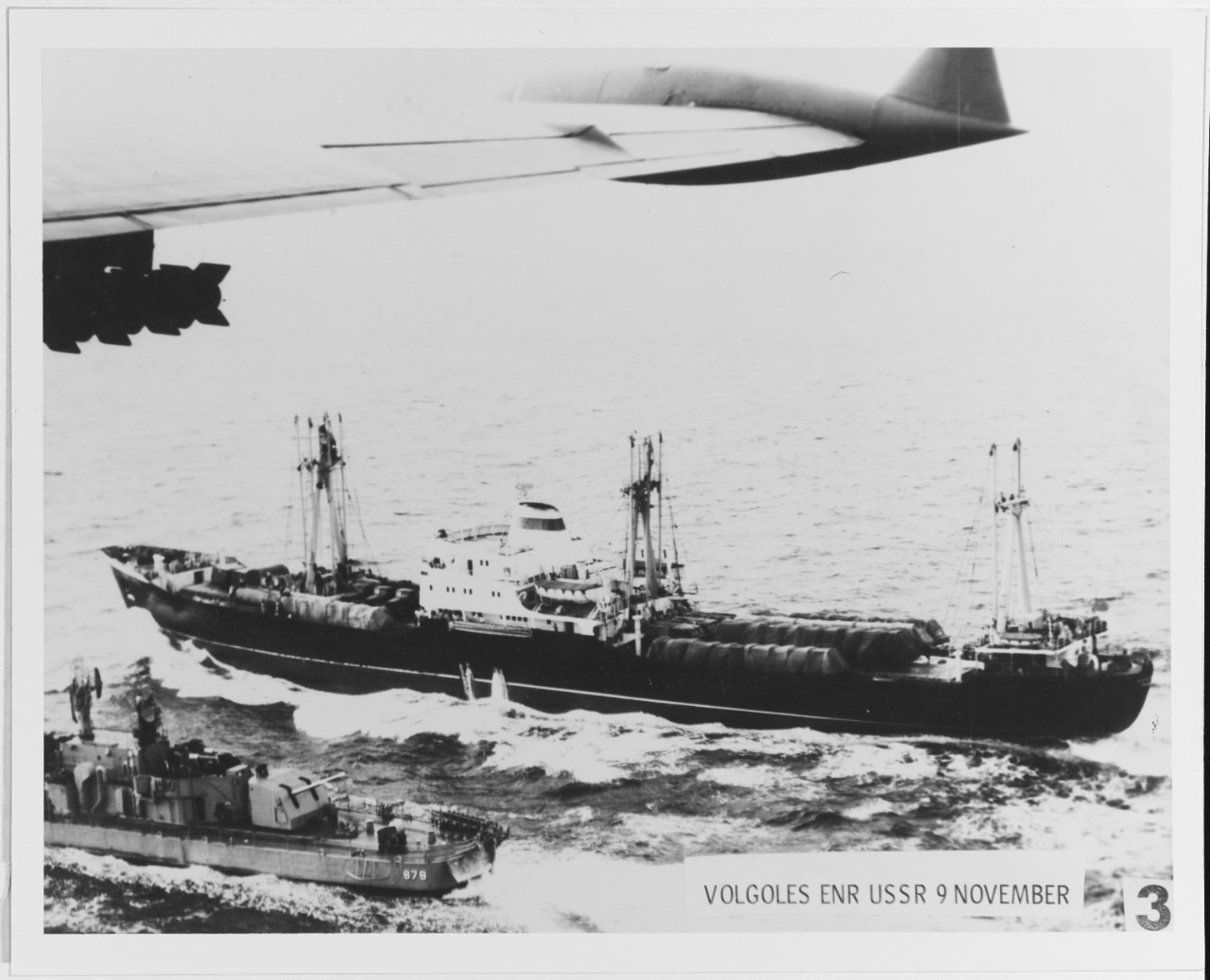
In October 1962, the world stood on the brink.
The Soviet Union secretly deployed nuclear missiles to Cuba — just 90 miles from the United States.
When American reconnaissance flights discovered the installations, John F. Kennedy announced a naval blockade around the island.
The United States called it a “quarantine.”
But everyone understood what it really meant:
A direct confrontation between two nuclear superpowers.
On one side was the United States.
On the other was the Soviet Union under Nikita Khrushchev.
Every military unit on both sides was on edge.
And deep below the Atlantic Ocean, one Soviet submarine was about to make a decision that could have changed human history.
The Submarine With a Nuclear Weapon

The submarine was B-59, a diesel-powered Soviet submarine operating near Cuba.
But this was no ordinary submarine patrol.
B-59 carried a weapon that almost nobody in the U.S. Navy knew about:
A nuclear torpedo.
Its explosive power was roughly equal to the atomic bomb dropped on Hiroshima.
The submarine’s mission was simple:
Remain hidden.
Avoid detection.
And if war began — retaliate.
But there was a problem.
American destroyers had already found them.
Depth Charges and Rising Panic

U.S. Navy ships began dropping practice depth charges near the submarine.
These weren’t meant to destroy the submarine.
They were meant to signal:
“Surface and identify yourself.”
But the Soviet crew inside B-59 didn’t know that.
The submarine had been underwater for days.
Communication with Moscow had been lost.
The air inside was hot and suffocating.
The crew believed the worst had already happened.
World War III had begun.
Inside the submarine, tensions exploded.

The Decision That Could Have Started Armageddon
The submarine’s captain, Valentin Savitsky, believed the attack meant war had already started.
According to later accounts, he reportedly shouted:
“We’re going to blast them now. We will die, but we will sink them all.”
He wanted to fire the nuclear torpedo.
If launched, it would have destroyed the nearby American fleet.
And once a nuclear weapon was used, escalation would have been almost certain.
Within hours, the United States and the Soviet Union could have been exchanging nuclear strikes.
But Soviet protocol required something unusual.
To launch the nuclear torpedo, three officers had to agree.
The captain
The political officer
The flotilla commander on board
Two already agreed.
Only one man stood in the way.
One Man Said No
That man was Vasili Arkhipov.
He was the senior officer aboard the submarine and the commander of the submarine flotilla.
Unlike others on board, Arkhipov was calm.
He argued that the Americans were not attacking — they were signaling the submarine to surface.
Launching the nuclear torpedo would guarantee nuclear war.
Arkhipov refused.
And he kept refusing.
Instead, he convinced Captain Savitsky to surface the submarine and wait for orders.
Eventually, the submarine rose to the surface.
The nuclear torpedo was never launched.
And the world never knew how close it had come to catastrophe.
A Secret the World Didn’t Know
For decades, the incident remained secret.
Even American commanders involved in the blockade had no idea that a nuclear weapon had nearly been fired.
It wasn’t until 2002, after Cold War archives began opening, that the full story emerged.
Historians and military officials were stunned.
The world had come within a single decision of nuclear war.
And that decision had been made by a man whose name almost nobody had heard.
The Quiet Hero of the Cold War

Unlike famous generals or politicians, Arkhipov received little recognition during his lifetime.
The Soviet Union did not publicly celebrate the incident.
He continued serving in the navy and later became a vice admiral.
But the story of B-59 eventually reached historians.
Many now consider Arkhipov one of the most important individuals in modern history.
Because in a moment of fear, confusion, and enormous pressure, he did something rare.
He slowed down.
He thought.
And he refused to start a war.
The Signal
History often focuses on massive forces: economies, armies, and political systems.
But sometimes the course of history turns on a single human decision.
In October 1962, deep underwater in the Atlantic Ocean, the fate of the world depended on one vote.
If Vasili Arkhipov had agreed to launch that torpedo, the Cold War might have turned hot.
Instead, the submarine surfaced.
And the world kept turning.
Disclaimer: The content published by The Signal India (TSI) is for informational and educational purposes only and should not be considered financial, investment, legal, or professional advice. Views expressed are those of the respective authors, and readers should conduct their own research and consult qualified professionals before making any decisions.
Image Credits
Vasili Arkhipov archival photographs — Public Domain / Soviet Naval Archives
Cuban Missile Crisis naval images — U.S. Navy / U.S. National Archives (Public Domain)
Foxtrot-class submarine photographs — Russian Navy archival photos (Public Domain)
Depth charge and naval blockade imagery — U.S. Department of Defense / National Archives (Public Domain)
Images used under public domain historical archives.